
Advocacy Project
Introduction
As a young child I was always drawn to the beauty and grace of delphinus (dolphins) carried with them. I believe this obsession of learning about dolphins all began due to my mother decorating our restroom with props of
dolphins. Literally everything was dolphin inspired,
to the shower curtain, to a simple toothbrush holder;
it was dolphins, she even had glass statues of them
surrounding the sink. As I got older I would tell people
that my favorite animal was a dolphin and they would
ask why, well it is fairly simple as for the fact that they
are absolutely intelligent and have had great human
encounterments in the wild. For so long I have
wondered how they could be so intelligent and why people
would say if we are ever attacked by a shark a dolphin will be there to save us. To begin learning more about these beautiful creatures we need to look up their history on this plant.
The very first dolphins roamed this Earth in the Early Miocene Epoch which is approximately 16 to 23 million years ago. This was discovered by the fossil that was found and they studied it to calculate how long ago it was. Aristotle was the first philosopher who had discovered cetaceans and wrote about them and made some observations. Since then there have been many scientists that have studied cetaceans on their ways of communicating to their intelligence, to name a few would be Denise Herzing studying the way dolphins communicate for over thirty years. Kieran C. R. Fox is a neurologist who conducted a research study with two other colleagues on the social roots of how the dolphins brain works; while Rhianne Ward and her colleagues studied the whistles of the Indo-Pacific Bottlenose dolphins and what they actually mean. These three were the big sources to understand the makeup of dolphins and how intelligent they are, as well as understanding the way they communicate with themselves, such as each whistle has its own meaning.
With this information we are going to be able to understand why cetaceans shouldn’t be in tanks but should be roaming freely in their natural habitats. They endure so much pain and experience things that they shouldn’t be living through and there are solutions that will help us move forward from this situation. First things first is to understand how we got here in the first place and then dismantling the issue.

Above demonstrates how dolphins love being together and they stay in pods
Scientific Literature
When we think of dolphins, for the most part, we see them as a very intelligent,
social, and some might say a curious species. According to the WDC organization, dolphins have such a sophisticated mind that they are able to pass on knowledge from one to another. Us humans do this with one another as well, we know that knowledge is important, and it seems that dolphins seem to understand this. For years scientists have been studying how it was that dolphins were able to communicate with each other and how they behaved or interacted with other dolphins.
In 1999, Herman said that dolphins are able to understand the pointing of a finger, and other gestures we might make (113). For an animal to understand what another animal is referring to, us humans, is crazy, considering that this mammal doesn’t even have fingers to reference what they're meant for. Dolphins have the second highest body to brain ratio. With that being said, who’s to say that a dolphin can’t be a conscious being. Dolphins make a set of clicks that they use to communicate with each other and also to help them out with certain situations (Moore 162). There was little to no understanding on the behavior of wild dolphins. According to Kuczaj in 2005, much of our understanding came from studying captive dolphins since the conditions to study wild dolphins were difficult (221).
A caring mother will teach her calf, since they’re social creatures, and attend to their little ones. Since dolphins are able to develop their own personalities and distinguish that they sometimes need to leave a group or exile someone from the group, for their benefit, we can’t help to assume that they’re conscious of themselves and aware of their group members. The WDC organization informs us that dolphins have spindle neurons that allow them to deep think, something not every animal can do. With deep thinking they are able to, remember, problem solve, and even process emotions!
Dolphins are not below us in importance, and their lives are as valuable as any other human being. When they are able to experience emotions, we should try to monitor humans or events that might be stressing these creatures. No one would like to be harassed by another person, we all like to avoid conflict or distress. We have the power and responsibility to make sure there’s little harm that we do to them.

Click on the image above to visit their website and learn more!
Mother Dolphins Behaviors when Their Calf is Present
Us humans are very social creatures, and one thing we do well is teach others things they might not know. There was a research study, “Evidence of teaching in atlantic spotted dolphins (Stenella frontalis) by mother dolphins foraging in the presence of their calves,” that was conducted by Courtney E. Bender, Denise L. Herzing, and David F. Bjorklund in which they studied Atlantic spotted dolphins to see if they were capable of social learning. There was little to no evidence that this was capable of happening with animals that were nonhuman since it required advanced social-cognitive skills (Boesch and Tomasello 43). The methods they used to conduct this study was video recording nine mother dolphins underwater, when the waters were clear and warm for optimal recording, to assess foraging behaviors by individual mothers and study their behavior when hunting with and without their calves around.
They noticed that when the mother dolphins were hunting with their calves present, the mother dolphins would chase their prey longer compared to when they would hunt without their calves present. One mother and her calf demonstrated the process of teaching and social learning, so much so that when the calf grew to have her own baby, the now mother would teach the same foraging behavior she was taught as a calf by her own mother (Herzing 47).
The results were very important to discover since it threw out the possibility by theorists that non-human animals don’t have the capability to teach or of social learning. Before this, we would consider these animals as not conscious of themselves, but would someone or something without any consciousness of themselves be able to feel the duty of teaching their offspring?

Above we have a beautiful image of a Atlantic Spotted Dolphin with her calf.
Dolphin Brains- Social Roots
It would be selfish for us to think that we’re really the only intelligent life form because we advanced so far in evolution. In the research study “ The social and cultural roots of whale and dolphin brains” by researchers Kieran C. R. Fox, Michael Muthukrishna and Susanne Shultz, they try to correlate the size of the brain to body ratio to intelligence. They say that dolphins have the second to largest brain to body ratio in size. When an animal has a large brain it’s because it’s an evolutionary response to complex and information rich social environments (Kieran 1699). They’re smart creatures, dolphins even have their own organized hierarchical social structures (Kieran 1699). The researchers compiled data from cetations, from individuals, small groups, medium sized and also large sized groups that were recorded. What they got from this was that medium sized group members tended to be smarter than the other groups. The reason for this was because of their higher social repertoire. On average they had over double the social repertoire over the individual groups, and the larger groups (Kieran 1701).
This kind of information is important for us because for years we thought that only primates were close to us in intelligence but it turns out that whales and dolphins were up there as well (Kieran 1701). If those two species, that are nowhere near related, are close to our knowledge, what other species can be right under our nose?
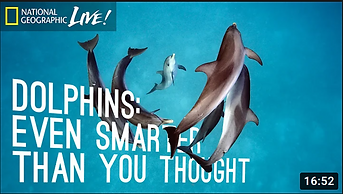
To learn more about dolphin intelligence go check out this video.
Whistle Characteristics of Indo-Pacific Bottlenose Dolphins
Just as we believe we are the superior animal in intelligence, we also believe to be superior because we learn languages. The truth of the matter is that they have their ways of communicating that we do not understand, does that make us dumb? No, it simply means that they have their way of
communicating. Rhianne Ward, Iain Parnum,
Christine Erbe, Chandra Salgado-Kent all
participated in a research study, “Whistle
Characteristics of Indo-Pacific Bottlenose
Dolphins (Tursiops aduncus) in the Fremantle
Inner Harbour, Western Australia,” in a span of
six weeks they observed and listened to whistles
of bottlenose dolphins off of Fremantle Inner Harbour, Western Australia. This was all conducted to see how dolphins communicate and how their whistles differ each time. They then did an `acoustic analysis and as well visually saw the whistles to compare each and every one of them. As a result they received information about the whistles such as the contours of a whistle, trains, features, and signature whistles. They found five different whistles that were most common in inter-whistle-intervals of 1-10s (Harbour, 162).
When it comes to learning their form of communication, it’s important for scientists to understand it since it’s the key to their world. Just as language removes borders with people, it could remove the borders with the animals. Understanding the complicity of their communication system is the entry point of cracking their code down and beginning to know what they talk about with others.

Listen to a Indo-Pacific Bottlenose Dolphin whistle
Discussion
We know that dolphins are more than capable of feeling things just like we do, and we know that they’re just as intelligent as we are. They're very similar to us and just like a right minded person wouldn’t harm another human being, we should do the same for these species. As we speak right now, there are many issues that dolphins go through, for example, many dolphins are captured and sold to aquariums so that they can make money off of them. These dolphins are forced to adapt to their tanks where they’ll be trained to do tricks, for our entertainment. That’s not even the worst of it, in some countries, they corner dolphins and literally kill them on the spot and chop them up for their body parts. The water turns red as it goes on for days and days. We as the people should be fighting for them, human interactions disturbs their peace and for some, their lives.
Further analyzing the way they communicate and seeing how intelligent they truly are there is no reason for them to be in tanks for our entertainment. Who are we to choose if an animal should be captive and kept from their homes. When they are captive for long periods of time it is obvious to say that there will be damages to their physical and mental state. Just imagine you were kidnapped from your own home and taken to a new environment with new conditions such as a smaller room, not being fed the way you are supposed to, and being trained to perform for people since you are the entertainment. You would definitely go insane and would love to go back home. Psychologically you will not be okay and even more so your health would drastically decrease. This is exactly what is happening to our poor cetaceans, a study has shown that after one year of living under captivity conditions “The average survival time in captivity for all bottlenose dolphin… is 12 years, 9 months and 8 days – much lower than the wild where they live to between 30 and 50 years” (WDC). As seen in this statistical analysis their lifespan is outrageously cut in half due to captivity, but we are still visiting places that are keeping these animals as enslaved entertainers. There is a phrase that Dr. Richard Ryder stated when asked about speciesism and that is “...morally it’s important that X amount of pain in a dog or an elephant or a cat matters as much as X amount of pain in human beings…” (Ryder 1:54).
<------------ Click Here
Click Here ------------>
Discussing the Problem
Dolphins are being abused or harmed in many ways by us humans that it’s so sickening, yet little to nothing is being done about this. If we were to do nothing, their suffering would continue. For one, in Taiji,
Japan, dolphins face the danger of being
hunted or captured every single year when
it’s hunting season, which lasts a whole 6
months! This hunting season alone, a total
of 547 dolphins were slaughtered, and 140
were taken captive, which would be sold for
their own gain (Dolphin Project). They have a
quota of 1749 dolphins that they are able to
legally capture or kill for the season. The
people who slaughter these animals have no
mercy for anyone, if they find a juvenile or
baby dolphin, they’ll either kill them with the rest of them, or toss them out in the ocean where they have to fend for themselves, which is practically the death sentence.
On top of this humans do not keep their habitats clean; ocean pollution increases each year with about 17 billion pounds of plastic entering their oceans. Even more so after Covid-19 pandemic hit. The mask mandate caused 30% more waste to get into their oceans (Mosley). This greatly impacts the species that live in our oceans, it even affects those who fly. There have been seagulls that get soda holders around their necks, but even more so our dolphins have an enormous impact with this dilemma. Pollutants, such as toxins and pollutants, enter their waters and they cause chemicals to create imbalances in their ecosystems which causes the fish to get toxins and this causes disruptions in the dolphins food chain. With these toxins entering the dolphins system it alternates their brain chemicals which causes them to get severe damage. They can also disrupt their reproductive systems.
One other problem that faces the species of the dolphins is the captivation of them in the aquariums. This practice has been going on for over a century now. “In the 1860s and 70s, beluga whales and dolphins were being captured and shipped to aquariums throughout the United States and Europe.”(OneGreenPlanet) It’s been this long and we still haven’t stricken the regulations that allow this. This was done even before the orcas were being used as the main course of entertainment. We can safely say that no capturing of an animal from its natural habitat is humane. While many might say that captivating a dolphin and keeping them safe in a tank is a good thing, it’s actually the opposite of that. Dolphins were not meant to be kept in tanks, and their captivators know that, but that’s the least of their worries. As long as these cute sea creatures are able to appeal to the public to come in to see them and bring in their money, that’s all that matters to them. They bring about $3,000 a day in aquariums and attractions that have dolphins captive (Sun Sentinel). This species needs their hundreds of miles long ocean to swim freely, not their circular tanks where they’re forced to swim in circles for their whole lives. Being confined in a small tank is what causes severe depression in these animals, this is where dolphins can develop self-destructive behavior like smashing their heads against the walls of the tanks (Dolphin project).
The way these dolphins are treated behind the curtains is awful as well. For one, the way they get dolphins to do tricks for them is not by training them with care and love, but by starving them(Earth buddies). Right before shows, these dolphins are kept hungry and they have to wait for their trainers to feed them fish that isn’t even fresh. When they do tricks that the people love and pay to see, they get rewarded with the food they have been desperately wanting.
Who’s responsible for this problem of not being shut down yet? Well, it’s a little bit of everyone's fault. The government should be making regulations that prevent the buying, or capturing of dolphins in the future, making sure this cultural norm comes to an end. The corporations are directly at fault for taking advantage of these poor animals for monetary reasons. They’re being selfish for not considering the life of such an intellectual species, they’re literally robbing them of their freedom.Us, the people, don’t get a pass from this either though, as we keep these businesses up and running from buying tickets to go see these dolphin acts. We’re supporting this animal abuse and letting them know that we have no issue with it. Animal abuse is not okay in any form, it needs to stop.

These are the numbers of each species of dolphins that were hunted in the year of 2020-2021


This image is a demonstration of the abnormalities these dolphins go through in captivity
The amount of pollution in our oceans is shown in this image
Solving the Problem
Global Solutions
While solving this horrific issue is something we should all come together to accomplish, it’s no easy task to do. We have to see what our leaders have done to combat this issue, because we are usually greatly influenced by our government, and when seeing them concern it means that we should be concerned as well. In October 21, 1972 President Richard Nixon signed into law the Marine Mammal Protection Act (MMPA) which states it “prohibits, with certain exceptions, the “take” of marine mammals in U.S. waters and by U.S. citizens on the high seas, and the importation of marine mammals and marine mammal products into the U.S” (FWS). Although this was a great way to start protecting our marine mammals, they are still being captured and put into tanks. As times progressed more bills came out specifically targeting a certain species, in this case there is a bill that has been introduced by Senator Cathleen Galgiani called the Dolphin Protection Act, Senate Bill 1405 (DPA). This bill states it would be “unlawful to hold, breed, import or export a cetacean, such as a whale or dolphin in captivity for display, performance or entertainment purposes” (AP News). This bill will stop the capturing of
dolphins and whales for entertainment
use in California only and was introduced
in the early months of 2020. It is
astonishing to even fathom that this will
be the very first bill that will prohibit people
from capturing dolphins for entertainment
usage, since the very first dolphin show was
displayed in 1938 in St. Augustine, Florida. It
took 82 years for a step to be made, 82 years.
This will greatly affect the people who are making profit off these animals, such as those big corporations; SeaWorld and aquariums. The SeaWorld team makes approximately 1.4 billion U.S dollars in a year. That means that each passing day they are profiting off these animals that are living in exhibits. The public that go to these big marine parks go for one main reason: the dolphin and orca shows. That’s their big lottery ticket there, those big beautiful animals that are trained on days end to perform for our amusement. Although the law that passed in 1972 is a great start, the bill that was passed in California is a major big step that directly attacks the main issue, using dolphins for entertainment and having them live in horrible conditions. This can soon become a law throughout our nation and could stop it at its core. This bill is specifically attacking the entertainment industry, not rehabilitation centers that help marine mammals and take them back to the ocean.

First dolphin show in 1938; St. Augustine
Grassroot Solution
In order for this problem to even be addressed by the leaders of the country, we need to take it step by step to make our voices heard. However, we don’t need to solely rely on leaders to enforce regulations, while it will help tremendously, the public can just be as impactful on their own to make change happen. With the people being large in numbers, it can seriously impact a business in stopping their practices, example being a boycott. With the times we live in, social media is our biggest tool to get those numbers, we are able to spread awareness all over the world within a few seconds. With every share from a person we will reach people who didn’t know this was a problem, let alone when it reaches a celebrity that has millions of followers. This makes a huge impact, and is easily one of top solutions to any problem.
There was a campaign in Indonesia that went with the hashtag #FreeBaliDolphins that was aiming to stop Indonesia’s traveling dolphin circus. This circus first started in 2009, and the dolphins “were transported from village to village, from city to city, for a period of four weeks at each location.” The dolphins were also kept in boxes that were as big as them, in trucks to transport them, they had no space to move and they suffered there. Thanks to constant campaigning, the pressure was never dying down, it helped finally shut down the traveling dolphin circus on February 5, 2020. The Ministry of Environment and Forestry in Indonesia chose to not renew the permits that they needed to keep the act going. While this did end the travels of this circus, it didn’t end the captivity of the dolphins. It’s one step at a time and the campaign is still going.

Pros of Social Media Campaigning
Here is one of the tweets with the social media campaign the Dolphin Project did under #FreeBaliDolphins, click on the image to see the tweet and many more tweets under that Hashtag!
The power of campaigning is key to making this dilemma go away. The main tool that can really expand the awareness of the issues of dolphins being held in captivity is social media. Social media typically has negative connotations due to the Hollywood entertainment industry that causes drama, but when used in an educational matter it could have such a big impact, for example making a twitter account just to spread the word and as well doing some research by following animal researchers that are actively campaigning and sharing their knowledge on the cause. As well as following many other people to spread the word. When you use social media for good it can be such an astonishing tool and I recommend using it for educational purposes.
Pros for Captivity
Freeing the dolphins is the next best thing that we can do for the ones that have been held captive for years, while also not capturing anymore for our benefit. Some might say that keeping them captive
is the best thing for them since being
captive is all they know. They rely on their
trainers to feed them and also guide them.
If they were to be released into the wild,
some might say that they would die from
starvation since they don’t know how to
hunt or from not being in a pod. Another
thing someone might say is that the dolphins are better off staying in their tanks since they are safe from dangers that might be in the ocean. There could be fishermen that have nets out that might trap these dolphins, or they might migrate to an area where they are being hunted. To them, the tanks are their safe haven.

Here people are helping a baby calf